
TO CONTINUE, CONFIRM THAT YOU ARE 18+ YEARS OLD
Disclaimer: please note that the offered products are legal in our country.
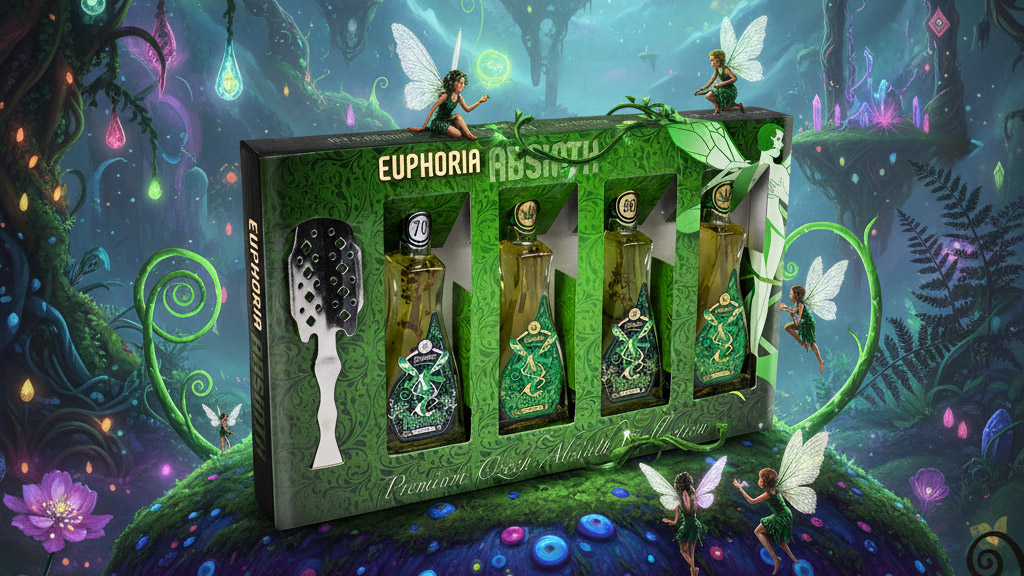
Absinthe, nicknamed the Green Fairy, is one of the most fascinating and controversial alcoholic drinks in history. It was loved by poets, condemned by doctors, banned by governments, and surrounded by myths that persist to this day.
Absinthe, nicknamed the Green Fairy, is one of the most fascinating and controversial alcoholic drinks in history. It was loved by poets, condemned by doctors, banned by governments, and surrounded by myths that persist to this day. Its journey from a medicinal elixir to an iconic drink of bar culture is full of dramatic twists.
The origins of absinthe go back to the late 18th century in Switzerland’s Val-de-Travers. The first recipe was reportedly created by a herbalist named Madame Henriod, who made a medicinal herbal liqueur. Soon, French doctor Pierre Ordinaire took interest in the drink and promoted it as a universal remedy for ailments ranging from headaches to digestive problems.
A key ingredient shaping both the taste and the reputation of absinthe was wormwood (Artemisia absinthium). This plant contains thujone, the compound that later became the center of controversy.
In the 19th century, absinthe spread rapidly into France, especially Paris. Thanks to its refreshing taste and unique serving ritual, it became a staple in cafés and bars.
Everyday life even had its dedicated “green hour” – l’heure verte, when thousands gathered to enjoy their glass of absinthe.
Artists and writers believed the drink inspired them. Vincent van Gogh, Paul Verlaine, Arthur Rimbaud, and Oscar Wilde were among its most famous devotees. Absinthe became a symbol of bohemian life, rebellion, and artistic exploration.
With its growing popularity came growing fears. Critics claimed that the thujone in wormwood caused hallucinations, addiction, and even madness. Stories of “absinthe dementia” circulated, along with tales of crimes committed under its influence.
The most infamous case was the “Absinthe Murder” of 1905 in Switzerland, when farmer Jean Lanfray killed his family after drinking absinthe. Although he had consumed large amounts of wine and brandy beforehand, absinthe was blamed, and its reputation was permanently tarnished.
At the start of the 20th century, bans swept across Europe. The wine industry, struggling with the phylloxera plague, also pushed against absinthe to reclaim lost popularity. By 1915, absinthe was banned in France and later in many other countries.
Modern scientific studies eventually revealed that the demonization of absinthe was exaggerated. The thujone content in the drink was far too low to cause hallucinations or psychosis. Most of the effects attributed to the “Green Fairy” were due to its high alcohol content rather than wormwood itself.
Absinthe became a forbidden and mythologized drink, surviving only underground or in a handful of countries where it was never outlawed.
The 1990s brought a turning point. Historians and producers rediscovered original recipes, and legislation gradually allowed the legal production and sale of absinthe. The European Union and the U.S. legalized drinks with controlled levels of thujone, and the Green Fairy could finally reemerge in bars.
Today’s absinthe is often made through traditional herbal distillation, honoring historic methods. Premium brands emphasize quality, craftsmanship, and authenticity. Bartenders now use absinthe to create both classic cocktails (such as the Sazerac or Corpse Reviver) and modern twists, adding its distinctive character to the glass.
We now know that absinthe is not a hallucinogenic drug, but a sophisticated spirit with a rich history. From a once-forbidden drink, it has become a sought-after alcohol again, connecting the mystique of the past with modern mixology.
For bar culture enthusiasts, absinthe represents not only a drink but also a ritual, a story, and a tradition carried through generations.


